Advances Precision Metal Processing with High-Power Flat Sheet Laser Cutters
Introduction
Did you know that a modern laser cutting machine can increase production efficiency by more than 40% while significantly reducing material waste? For manufacturers competing in today’s demanding market, precision, speed, and automation are no longer optional—they are essential. This guide explains how high-power flat sheet laser cutters help metal fabrication companies improve productivity, reduce operating costs, and deliver superior cutting quality across a wide range of industries.
Why Every Modern Factory Needs a Laser Cutting Machine
Manufacturing continues to evolve toward automation and intelligent production. Today’s customers expect shorter lead times, tighter tolerances, and higher-quality finished products. A high-performance laser cutting machine provides manufacturers with the flexibility and efficiency needed to meet these expectations.
Unlike traditional plasma or mechanical cutting methods, fiber laser technology delivers exceptional precision while minimizing heat distortion. This enables businesses to process more orders with fewer errors and less secondary finishing.
Whether producing construction materials, machinery components, automotive parts, electrical cabinets, or industrial equipment, investing in an advanced laser cutting solution creates long-term competitive advantages.
How High-Power Flat Sheet Laser Cutters Improve Productivity
Faster Cutting Speed
One of the biggest advantages of a high-power laser cutting machine is speed. Modern fiber lasers ranging from 12kW to over 60kW can rapidly process thick carbon steel, stainless steel, aluminum, brass, and copper.
Higher cutting speeds translate into:
- Increased daily production
- Shorter delivery times
- Higher machine utilization
- Greater return on investment
For high-volume production environments, every minute saved directly contributes to higher profitability.
Exceptional Precision
Precision determines product quality.
A professional metal sheet laser cutting machine maintains extremely tight tolerances while producing smooth, burr-free edges that often eliminate additional grinding or polishing.
Benefits include:
- Consistent dimensional accuracy
- Minimal deformation
- Clean cutting edges
- Better assembly quality
- Reduced scrap rates
This precision is especially important for industries requiring strict manufacturing standards.
Lower Operating Costs
Although high-power equipment requires a larger initial investment, operational savings quickly offset the purchase cost.
Compared with traditional processing methods, a modern laser cutting machine for steel reduces:
- Material waste
- Tool replacement costs
- Labor requirements
- Energy consumption
- Maintenance expenses
Intelligent nesting software further optimizes sheet utilization, maximizing material efficiency.
Applications Across Multiple Industries
High-power flat sheet laser cutters serve numerous industries because of their flexibility.
Common applications include:
Construction Equipment
Manufacturers process structural steel plates, bridge components, heavy machinery parts, and fabrication materials with outstanding precision.
Automotive Manufacturing
Automotive suppliers require consistent accuracy when producing chassis parts, brackets, reinforcement plates, and body panels.
Agricultural Machinery
Large agricultural equipment relies on durable steel components that require precise cutting before welding and assembly.
Electrical Cabinets
Electrical enclosure manufacturers depend on accurate hole positioning and smooth edge quality for efficient assembly.
Industrial Equipment
Heavy equipment producers use a sheet metal laser cutting machine for steel to manufacture machine frames, covers, brackets, and customized components.
Advanced Technology Behind Modern Fiber Lasers
Today’s high-power machines combine multiple intelligent technologies.
Key innovations include:
Intelligent CNC Control
Modern controllers automatically optimize cutting paths, reducing idle movement and improving production efficiency.
Automatic Focus Laser Heads
Automatic focus systems adjust focal positions according to material thickness, delivering consistent cutting quality across different metals.
High-Speed Servo Systems
Advanced servo motors provide exceptional positioning accuracy and stable operation during high-speed cutting.
Automatic Loading and Unloading
Automation minimizes manual handling, allowing factories to achieve continuous production while reducing labor costs.
These technologies transform the laser cutting machine into a complete intelligent manufacturing solution.
Comparing Different Metal Cutting Solutions
Many manufacturers compare several cutting technologies before investing.
| Technology | Precision | Speed | Maintenance | Automation |
|---|---|---|---|---|
| Plasma Cutting | Medium | High | Moderate | Limited |
| Waterjet Cutting | High | Slow | High | Moderate |
| Mechanical Cutting | Medium | Medium | High | Low |
| Fiber Laser Cutting Machine | Excellent | Excellent | Low | Excellent |
For most industrial applications, fiber laser technology offers the best balance between quality, speed, and operating cost.
Flat Sheet Laser vs. Steel Pipe Laser Cutting
Many factories process both plates and tubes.
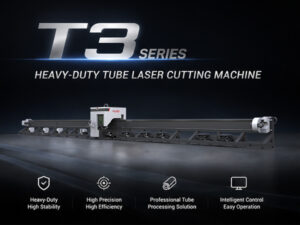
A steel pipe laser cutting machine specializes in cutting round, square, rectangular, and special-shaped tubes, while flat sheet laser cutters are optimized for processing metal plates with maximum efficiency.
Some manufacturers also integrate both systems into one production line to achieve complete metal processing capability.
Can High-Power Lasers Process H-Beams?
Yes.
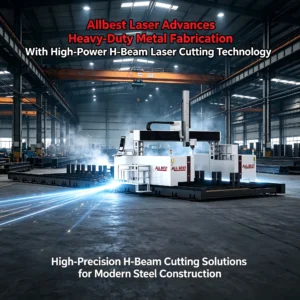
Many manufacturers also invest in a dedicated laser h beam cutting machine for structural steel fabrication.
H-beam laser systems are designed for:
- Structural steel fabrication
- Building construction
- Shipbuilding
- Heavy engineering
- Steel bridge manufacturing
When combined with a flat sheet laser cutting machine, manufacturers gain complete flexibility for processing nearly every type of steel component.
How to Choose the Best Laser Cutting Machine
Before purchasing equipment, buyers should evaluate several important factors.
1. Laser Power
Higher power increases productivity when processing thick materials.
2. Cutting Thickness
Choose equipment based on your primary material specifications.
3. Machine Stability
A rigid machine frame ensures long-term cutting accuracy.
4. Automation Features
Automatic loading systems, exchange tables, and intelligent monitoring improve production efficiency.
5. Technical Support
Reliable after-sales service minimizes downtime and protects your investment.
6. Software Compatibility
Advanced nesting and CNC software simplify operation while maximizing material utilization.
Future Trends in Laser Cutting Technology
Industry 4.0 continues driving innovation in laser processing.
Future developments include:
- AI-assisted production optimization
- Predictive maintenance
- Remote equipment monitoring
- Fully automated smart factories
- Higher laser power with lower energy consumption
As manufacturing becomes increasingly digital, the laser cutting machine will remain one of the most important technologies for precision metal fabrication.
Conclusion
A high-power laser cutting machine has become an essential investment for manufacturers seeking greater efficiency, superior precision, and long-term profitability. Whether producing industrial machinery, construction materials, automotive components, or customized sheet metal products, modern fiber laser technology delivers faster production, lower operating costs, and exceptional cutting quality.
By selecting the right metal sheet laser cutting machine, integrating intelligent automation, and planning for future production needs, businesses can strengthen their competitiveness and prepare for the next generation of smart manufacturing.