How the cnc laser h beam cutting machine Reshapes Steel Structure Standards
Traditional mechanical coping and plasma processing costs around $30 per ton in labor and consumables, whereas an automated cnc laser h beam cutting machine slashes that operational overhead to just $10 per ton. Struggling with slow assembly times, manual layout errors, and massive material handling bottlenecks in your heavy fabrication shop? This comprehensive guide explains how advanced 3D laser technology is completely reshaping steel structure manufacturing standards, eliminating secondary processing, and skyrocketing factory ROI.
The Bottleneck in Traditional Steel Manufacturing
For decades, the structural steel industry has relied on a fragmented, multi-step manufacturing process. When constructing commercial buildings, bridges, or industrial plants, I-beams and H-beams require extensive modification before they can be welded or bolted together.
Historically, processing a single structural beam meant moving massive, heavy steel profiles across multiple independent workstations:
Measuring and manual layout marking by workers.
Cutting to length using a traditional band saw.
Drilling bolt holes using a CNC drill line.
Coping and beveling edges using manual plasma torches or oxy-fuel.
This disjointed workflow requires massive factory floor space, multiple crane lifts, and a small army of operators. Furthermore, a traditional steel cutting machine like a band saw or plasma torch leaves rough edges, requiring extensive manual grinding before the steel is ready for robotic welding. In modern manufacturing, this level of inefficiency is no longer sustainable.
Enter the cnc laser h beam cutting machine
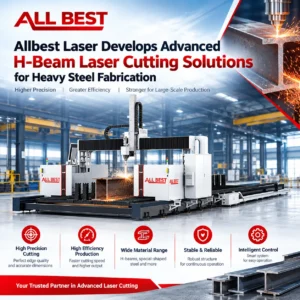
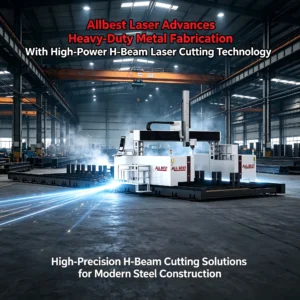
The solution to these massive industrial bottlenecks is consolidation through advanced optics. A cnc laser h beam cutting machine is an all-in-one, fully automated fabrication cell. By utilizing a multi-axis robotic cutting head and a high-power fiber laser source, this system can perform every single fabrication step—measuring, cutting, drilling, coping, marking, and beveling—in a single pass, on a single machine.
For factory owners and metal fabrication enterprises, investing in a cnc laser cutting machine specifically designed for structural profiles fundamentally changes the production mathematics. Instead of moving a two-ton beam to four different machines, the raw beam is loaded onto an automated feed roller, processed entirely within the laser enclosure, and exits fully finished and ready for assembly.
Core Advantages of a laser h beam cutting machine
The rapid adoption of this technology among industrial equipment distributors and heavy fabricators is driven by a series of transformative engineering advantages.
1. Absolute Precision and Zero Mechanical Layout
Structural steel engineering relies on tight tolerances for safe assembly. When manual workers measure and mark steel, human error is inevitable. A laser h beam cutting machine completely digitizes this process. The machine reads standard 3D CAD files (such as Tekla or SDS/2), uses integrated laser scanners to detect the exact dimensions and minor deformations of the raw beam, and adjusts the cutting path dynamically. Bolt holes are pierced with millimeter precision, guaranteeing that structural frames bolt together flawlessly on the construction site.
2. High-Speed 3D Beveling
Preparing steel for full-penetration welding requires precise bevels (V, Y, or K shapes). Traditional plasma beveling introduces excessive heat, causing thermal distortion and leaving a thick layer of dross. An h-beam laser cutting machine features a 5-axis or 6-axis cutting head that articulates around the flange and web of the beam. It vaporizes the steel to create perfect, dross-free bevels without altering the metallurgical properties of the steel, eliminating the need for post-cut grinding.
3. Unmatched Material Utilization
Software integration is a massive advantage. Advanced nesting software automatically groups different parts onto a single raw beam, utilizing “common-line cutting” where possible. This drastically reduces scrap metal, maximizing the yield of expensive raw steel materials.
ROI and Impact for Equipment Procurement Decision-Makers
For procurement managers and factory owners, the justification for purchasing a cnc laser h beam cutting machine lies in the drastic reduction of overhead and the acceleration of throughput.
| Production Metric | Traditional Multi-Station Workflow | cnc laser h beam cutting machine |
| Labor Requirement | 4-6 operators per shift | 1 operator per shift |
| Material Handling | High (multiple crane lifts) | Low (single load/unload) |
| Edge Quality | Rough (requires grinding) | Flawless (weld-ready instantly) |
| Factory Footprint | Massive (requires 4 machine zones) | Compact (single automated line) |
By consolidating the workflow, factories can easily double their weekly tonnage output without adding extra shifts or expanding their facility footprint.
Buying Guide & Maintenance for Technical Engineers
Industrial equipment distributors and technical engineers must carefully evaluate several parameters when specifying a cnc laser h beam cutting machine for a facility.
Wattage and Power Source
Structural steel requires immense power. While thin sheet metal can be cut with 3kW systems, cutting through the thick webs and flanges of structural H-beams typically requires laser sources ranging from 6kW to 12kW or more. Ensure the machine is equipped with a highly reliable fiber laser source capable of sustained output in harsh, dusty environments.
Dust Extraction and Safety
Vaporizing thick carbon steel generates a massive volume of metallic dust and smoke. The machine must be equipped with an industrial-grade, zoned fume extraction system. As the cutting head moves down the length of the beam, the extraction system should dynamically open suction valves only in the active cutting zone to maximize vacuum efficiency and maintain a safe breathing environment for factory personnel.
Assist Gas Strategy
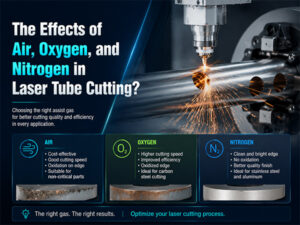
To cut heavy steel efficiently, these machines use Oxygen as an assist gas to create an exothermic reaction. Technical maintenance personnel must ensure that the factory’s oxygen supply system can deliver consistent, high-purity gas at steady pressures. Fluctuations in gas pressure will immediately cause cutting defects and heavy dross accumulation on the bottom flanges.
Conclusion
The era of slow, manual structural steel processing is rapidly coming to an end. By adopting a cnc laser h beam cutting machine, metal processing enterprises can drastically reduce their labor dependence, eliminate costly material handling bottlenecks, and deliver higher-quality steel structures to construction sites faster than ever before. For factories aiming to lead the market, this technology is the ultimate standard for modern heavy fabrication.