Key Applications of Laser Cutting Technology in Architectural Steel Structures
Traditional processing costs $45/hour in labor and rework, while an automated cnc laser cutting machine slashes it to $15/hour. Struggling with slow production times, inaccurate cuts, and shrinking margins in structural steel fabrication? This complete guide reveals how implementing advanced laser technology optimizes your architectural steel workflow, ensuring your facility maximizes throughput and long-term profitability.
Why Architectural Steel Demands a cnc laser cutting machine
For decades, metal fabrication and processing enterprises relied on plasma, oxy-fuel, or mechanical sawing to cut heavy structural steel. While functional, these traditional methods yield wide heat-affected zones (HAZ), massive material distortion, and jagged edges that require hours of secondary grinding. In modern architectural construction—where skyscrapers, stadiums, and expansive commercial facilities demand millimeter-perfect tolerances—outdated equipment is a massive liability.
Upgrading to a high-power cnc laser cutting machine completely transforms the production floor. Utilizing fiber laser technology, these systems deliver a highly concentrated beam of light that slices through thick carbon steel and stainless steel with absolute precision. For factory owners and equipment procurement decision-makers, this means zero secondary processing, perfectly flush weld joints, and a drastic reduction in structural assembly times on the actual construction site.
Core Applications of a cnc laser cutting machine in Steel Structures
The versatility of modern metal cutting equipment allows technical engineers to process complex architectural components that would be nearly impossible to handle efficiently with older tools. Here are the core applications where a cnc laser cutting machine dominates the structural steel industry:
1. Precision Base Plates and Connection Gussets
The foundation of any structural steel framework relies on base plates and connection gussets. These thick metal components bear immense weight and require perfectly aligned bolt holes for on-site assembly. A high-power cnc laser cutting machine effortlessly cuts through 20mm to 50mm thick steel plates, piercing bolt holes with zero taper. This structural steel laser cutting precision ensures that beams slot together perfectly in the field, eliminating costly construction delays.
2. Complex Hollow Structural Sections (HSS)
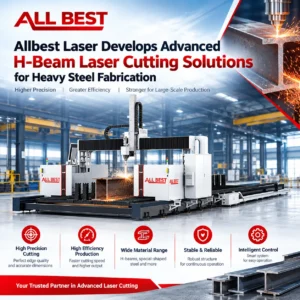
Modern architecture heavily features exposed steel tubes and Hollow Structural Sections (HSS) for both aesthetic appeal and structural integrity. Processing these tubes requires cutting complex intersecting profiles, fish-mouths, and angled bevels. A specialized tube-cutting cnc laser cutting machine uses a rotary chuck to seamlessly maneuver heavy beams, making it the premier fiber laser equipment for crafting intricate structural joints without manual measurement errors.
3. Facade Support Systems and Cladding Brackets
Beyond the main skeleton of a building, a massive amount of steel goes into the exterior envelope. Facade support systems demand thousands of custom-designed, geometrically unique brackets to hold glass, stone, or metal cladding. A flatbed cnc laser cutting machine thrives in this high-volume sheet metal processing environment. Its intelligent nesting software maximizes material utilization across large steel sheets, rapidly producing thousands of brackets with perfect consistency.
ROI of a cnc laser cutting machine for Metal Fabrication Enterprises
For industrial equipment distributors and factory owners, justifying the capital expenditure of heavy machinery comes down to the Return on Investment (ROI). Integrating a cnc laser cutting machine into your structural workflow provides undeniable financial advantages:
Drastic Reduction in Labor Costs: By eliminating the need for manual drilling, coping, and post-cut grinding, you can reallocate skilled laborers to high-value welding and assembly tasks.
Superior Material Utilization: Advanced CNC metal fabrication nesting software tightly packs parts onto a single sheet of steel, reducing scrap waste by up to 30% compared to manual layout methods.
Faster Turnaround Times: A high-power heavy duty laser cutter processes thick steel exponentially faster than plasma, allowing your factory to take on larger architectural contracts and meet tight construction deadlines.
Traditional Cutting vs. CNC Laser Cutting
| Feature | Traditional Methods (Plasma/Saw) | cnc laser cutting machine |
| Edge Quality | Rough, requires heavy grinding | Smooth, dross-free, weld-ready |
| Tolerance/Accuracy | ± 1.0mm to 2.0mm | ± 0.05mm |
| Heat Affected Zone | Large (causes metal warping) | Minimal (maintains structural integrity) |
| Automation | Low to Medium | High (Lights-out manufacturing capable) |
Selecting the Right cnc laser cutting machine for Heavy Industry
Not all laser systems are built for the rigorous demands of the construction sector. When evaluating high-power fiber laser options, procurement decision-makers must prioritize scale and durability.
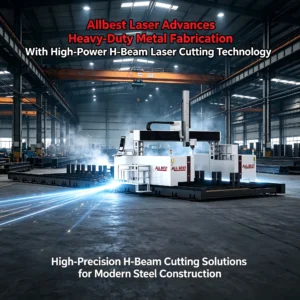
For architectural steel, a cnc laser cutting machine must feature a massive working bed—often 6000mm x 2500mm or larger—to accommodate standard industrial steel plates. Furthermore, processing 30mm+ thick plates reliably requires a laser source of at least 12kW, with many top-tier facilities now adopting 20kW or 30kW systems to maximize cutting speeds. Finally, ensure the machine features a heavy-duty, welded steel gantry that can absorb the kinetic energy of rapid movements without sacrificing micro-precision.
Maintenance Tips to Keep Your cnc laser cutting machine Running
For technical engineers and maintenance personnel, maximizing machine uptime is critical. Heavy steel processing generates significant metallic dust and intense heat. To keep your cnc laser cutting machine in peak condition:
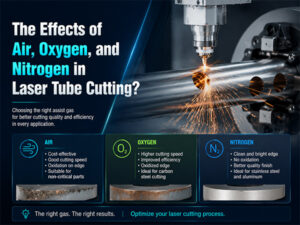
Monitor Gas Purity: Cutting thick structural steel requires ultra-pure Oxygen (99.95%+). Contaminated assist gas will immediately degrade your cutting speed and edge quality.
Protect the Optics: Inspect the cutting head’s protective windows daily. A single piece of molten spatter can ruin an expensive focusing lens if the protective glass is compromised.
Maintain the Chiller Unit: High-power lasers generate massive thermal loads. Regularly clean the chiller’s condenser fins and ensure the water conductivity remains within the manufacturer’s specified limits to prevent internal corrosion.
By modernizing your facility with a robust cnc laser cutting machine, you not only reduce operational bottlenecks but position your enterprise as a premier, high-tech partner in the lucrative architectural steel industry.